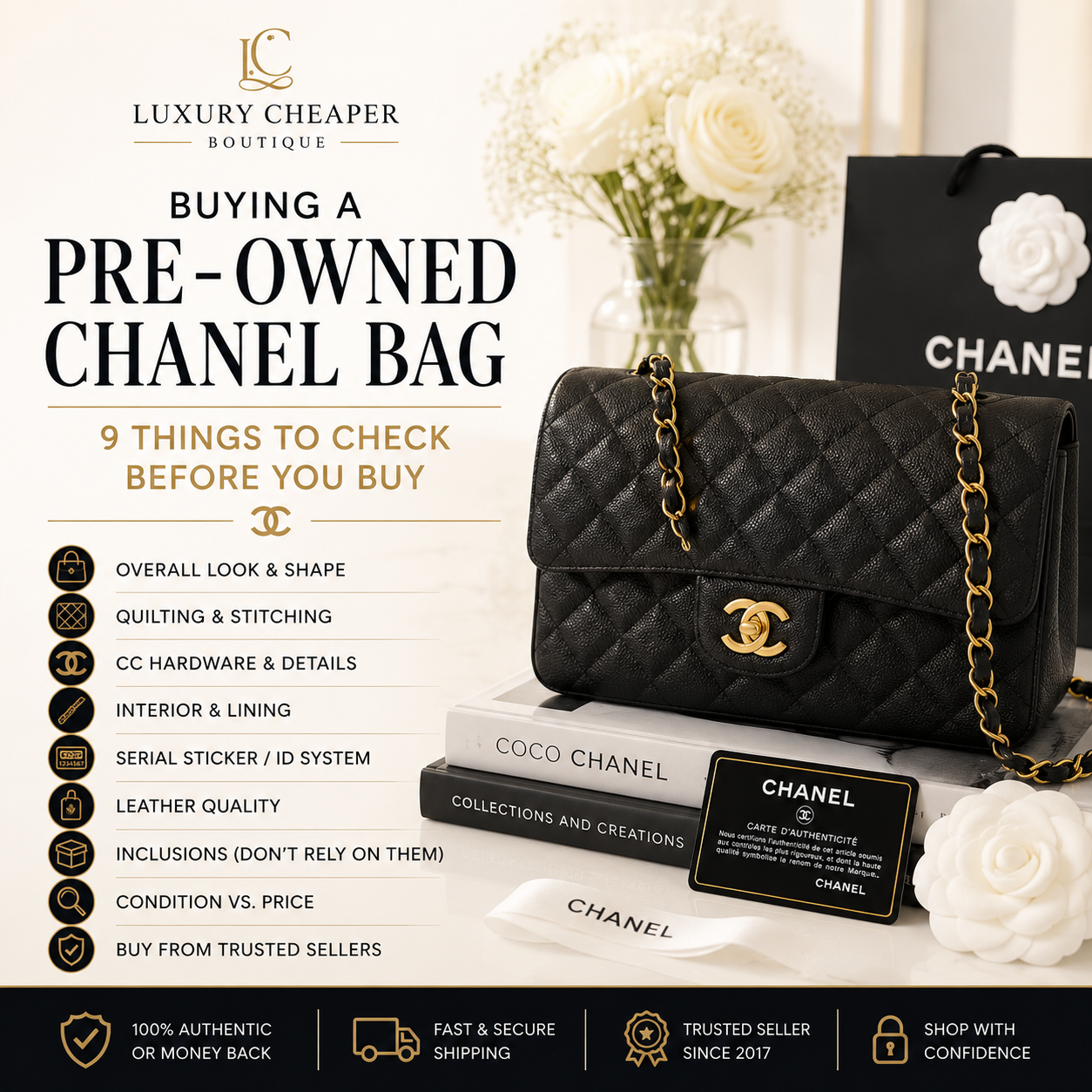
How to Spot a Fake Chanel Classic Flap
The Chanel Classic Flap is one of the most counterfeited bags in the world. Here is exactly what to check before every purchase — so you never get fooled.
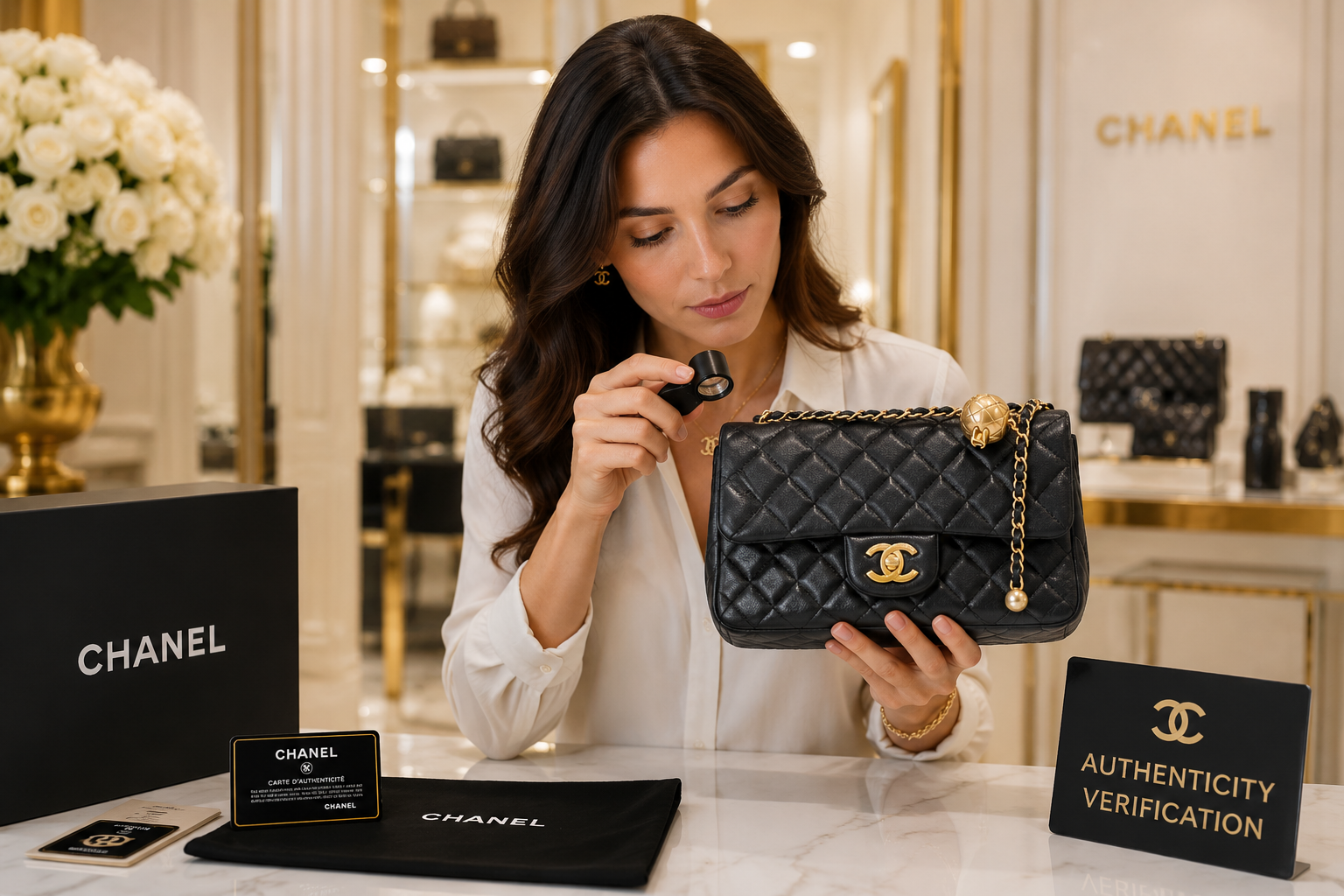
The Chanel Classic Flap is one of the most iconic — and most counterfeited — handbags ever made. With retail prices starting at $10,000 and climbing well above $12,000 for larger sizes, the financial stakes of buying a fake are enormous. Counterfeiters have become increasingly sophisticated, producing replicas that fool even experienced shoppers at first glance.
At Luxury Cheaper Boutique, every Chanel bag we sell goes through a careful inspection and authentication process before it is ever listed. In this guide, we are sharing exactly what we look for — so you can shop with confidence wherever you buy.
Why the Chanel Classic Flap Is So Heavily Counterfeited
The Classic Flap has been in continuous production since 1955, when Coco Chanel redesigned the original 2.55 bag to add the now-iconic CC turn-lock closure. Its timeless design, consistent demand, and high resale value make it the single most targeted bag for counterfeiters worldwide.
A convincing fake can sell for $200 to $800 on the grey market — while an authentic Classic Flap in good condition commands $4,000 to $9,000 pre-owned. The profit margin for counterfeiters is enormous, which is why fakes are everywhere and why authentication matters so much.
1. The CC Turn-Lock Clasp
The CC turn-lock is the first thing most people look at — and for good reason. On an authentic Classic Flap, the interlocking C's are perfectly symmetrical and evenly spaced. The left C faces right, the right C faces left, and they overlap in a precise, clean pattern.
On a fake, the C's are often uneven in thickness, slightly misaligned, or the overlap is off. The clasp itself should feel solid and weighty — not hollow or plasticky. When you turn it, it should click firmly into place with a satisfying resistance. A loose, wobbly, or overly easy clasp is a red flag.
The hardware finish matters too. Authentic Chanel uses 24-karat gold plating on gold hardware and ruthenium on silver hardware. Both should have a deep, rich tone — not shiny and cheap-looking. Look for the word "CHANEL" engraved on the back of the clasp in clean, even lettering.
2. The Quilting
The diamond quilting on a Chanel Classic Flap is one of the most telling authentication points — and one of the hardest for counterfeiters to replicate perfectly.
On an authentic bag, the quilting is perfectly uniform across the entire bag. Every diamond is the same size, the same depth, and the same angle. The stitching runs through the center of each diamond point, and the lines are straight and even from every angle.
On a fake, you will often see:
- Diamonds that are slightly different sizes across the bag
- Stitching that veers off-center at the diamond points
- Quilting that looks flatter or shallower than it should
- Puckering or bunching at the seams where the quilting meets the edges
Run your fingers across the quilting. On an authentic Classic Flap, the leather feels supple and structured at the same time — the diamonds have a firm, even puff to them. Counterfeit bags often feel either too stiff or too soft.
3. The Stitching
Chanel is known for its stitching precision. On an authentic Classic Flap, the stitching along the edge of the flap is tight, even, and consistent — typically in the range of 10 stitches per inch, though this can vary slightly by production year and size. What matters most is uniformity: every stitch should be the same length, the same depth, and perfectly parallel. Counterfeit bags almost always show uneven spacing, loose threads, or inconsistent tension.
The thread color is also important. On most Classic Flaps, the stitching thread matches the leather color exactly. On black bags, the thread is black. On beige bags, the thread is beige. The only exception is the original 2.55 reissue, which uses burgundy thread as a nod to the original 1955 design.
Fake bags frequently have:
- Inconsistent stitch counts (too many or too few per inch)
- Thread that is slightly the wrong shade
- Stitches that are uneven in length or spacing
- Loose threads or skipped stitches at stress points
4. The Serial Number and Authenticity Card
Every Chanel Classic Flap made after 1984 has a serial number sticker sewn into the interior lining, typically on the left side of the main compartment. The sticker is holographic and features a unique number that corresponds to an authenticity card that should come with the bag.
What to check on the serial number:
- The holographic sticker should shift color when tilted — from gold to green to black
- The numbers should be cleanly printed, not smudged or uneven
- The font is a specific Chanel typeface — look for clean, consistent letterforms
- The sticker should be firmly adhered, not peeling at the edges
The authenticity card should have the same number as the sticker, printed in the same font. The card is made of thick, quality cardstock — not flimsy paper. Fake cards are often thinner, have slightly off fonts, or feature numbers that do not match the sticker.
Important: A missing authenticity card does not automatically mean a bag is fake — cards are frequently lost over time. But a card that does not match the sticker is a definitive red flag.
5. The Chain Strap
The chain strap on a Chanel Classic Flap is one of the most distinctive elements of the bag — and one of the most revealing authentication points.
On an authentic bag, the chain is heavy and substantial. Pick it up and let it fall through your fingers — it should have real weight to it, not feel light and hollow. The links should be smooth and evenly formed, with no rough edges or casting marks.
The leather woven through the chain should be the same leather as the bag itself — same color, same texture, same suppleness. On fake bags, the chain leather is often a slightly different shade or a noticeably different texture.
The chain should also be the correct length for the size of the bag. A Classic Flap in medium (M/L) size has a chain that measures approximately 114 cm when fully extended. If the chain seems unusually short or long, that is worth investigating.
6. The Interior Lining
Open the bag and look inside. On an authentic Classic Flap, the interior lining is burgundy lambskin or caviar leather (depending on the exterior material) with a clean, structured finish. The stitching inside is as precise as the outside — Chanel does not cut corners where you cannot see.
Look for the gold-stamped "CHANEL" and "Made in France" (or Italy, for newer bags) on the interior leather. The font should be clean and deeply embossed. On fake bags, this stamp is often shallow, slightly blurry, or uses the wrong font.
The interior pockets should be clean and well-finished. The zipper pocket, if present, should have a smooth-running zipper with a Chanel-branded pull.
7. The Leather Quality
Chanel Classic Flaps come in two primary leathers: lambskin and caviar. Knowing the difference — and what authentic versions feel like — is essential.
Lambskin is buttery soft and smooth, with a slight sheen. It is delicate and shows scratches easily, which is why pre-owned lambskin bags in excellent condition command a premium. If a bag is described as lambskin but feels stiff or plasticky, that is a red flag.
Caviar leather has a pebbled texture — small, uniform bumps across the surface. It is more durable than lambskin and holds its shape better. On an authentic caviar Classic Flap, the pebbling is consistent and fine across the entire bag. Fake caviar leather often has larger, irregular pebbling or a texture that looks stamped rather than natural.
8. The Dust Bag and Box
Authentic Chanel bags come with a white dust bag featuring the Chanel logo in black. The dust bag should be made of soft, high-quality fabric — not thin or scratchy. The drawstring closure should be clean and even.
The box, if present, is a black Chanel box with a white interior and the Chanel logo on the lid. The box should be sturdy and well-made. Fake boxes are often flimsier, have slightly off logos, or use the wrong shade of black.
Neither the dust bag nor the box is definitive proof of authenticity on its own — both can be purchased separately. But their quality is a useful supporting data point.
The Bottom Line: Buy from a Trusted Source
Even with this guide, authenticating a Chanel Classic Flap requires experience and hands-on inspection. The best protection against buying a fake is to purchase from a seller who has already done the authentication work for you.
At Luxury Cheaper Boutique, every Chanel bag we sell has been carefully inspected using all of the criteria above — plus additional checks we have developed over nearly a decade of selling pre-owned luxury. We have been a trusted luxury reseller since 2017 and have served more than 1,000 customers across eBay, Poshmark, and Mercari.
Browse our authenticated Chanel collection and shop with confidence. Many items ship with a Luxury Cheaper Boutique Authenticity Card — our own inspection assurance, not issued by the original brand. See the full policy at fashionistaluxe.com/authenticity-guarantee.
Related reading: How to Authenticate a Pre-Owned Designer Bag · Pre-Owned vs. New Luxury Bags: Which Is a Better Value? · The Hermès Birkin: History, Sizes & Investment Value
Explore our pre-owned Chanel collection · Shop all designer handbags
Explore Topics
Written by
Luxury Cheaper Boutique
Luxury Cheaper Boutique is an independent reseller of authentic pre-owned designer handbags and accessories. We share practical guides to help shoppers make informed decisions when buying and caring for pre-owned luxury pieces.